Building Luxury Villas in Marbella: Rubén Solís on what it takes to build at the highest level

Marbella has long been associated with exceptional homes. Behind every villa, however, lies a complex process of planning, craftsmanship, technical knowledge and trust.
For Rubén Solís, CEO of B. Solís, building a luxury villa is not simply a matter of delivering a high-quality property. It means understanding the project in depth, respecting the architect’s vision and recognising what the client expects from the home they are creating.
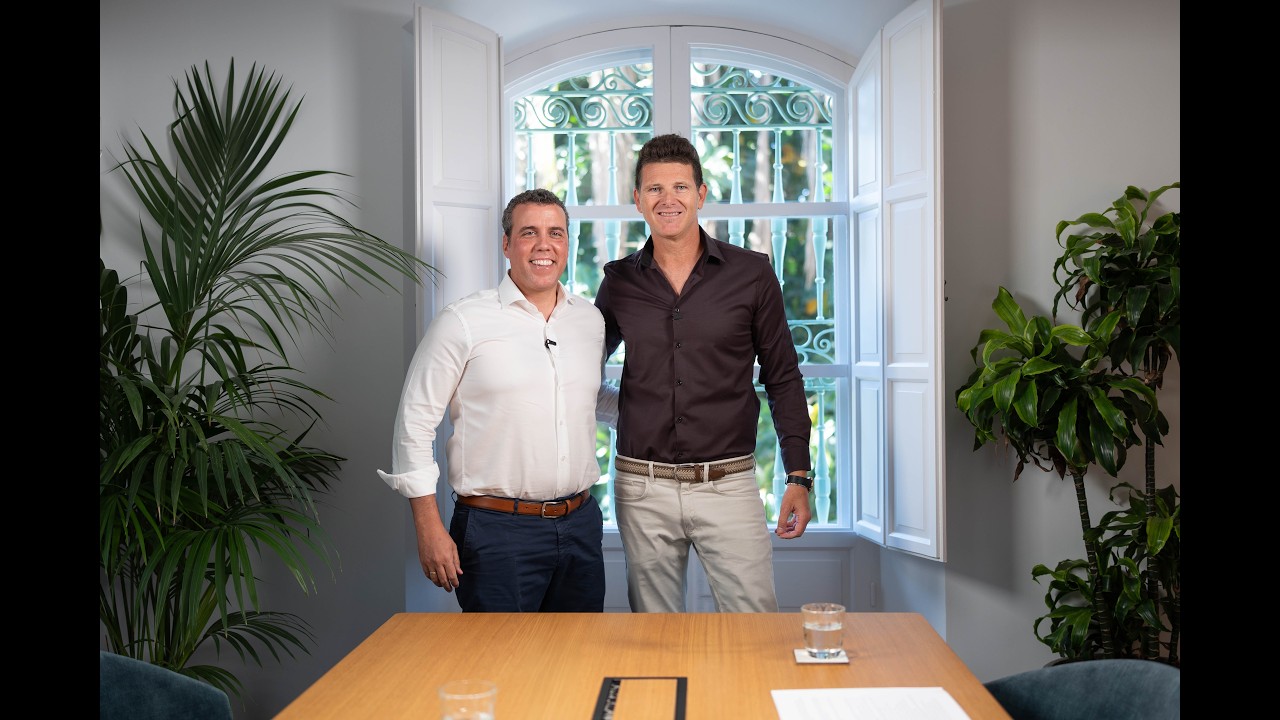
In conversation with Mariano Beristain, Managing Partner of DM Properties, Rubén Solís reflects on the evolution of luxury construction in Marbella, the story behind B. Solís and the challenges shaping the sector today.
A family business rooted in construction
B. Solís was founded in 1987 by Bonifacio Solís, Rubén’s father. His story began long before the company was created. Bonifacio left school at the age of 13 to support his family and started working as a bricklayer. In his early thirties, he decided to set up on his own and began laying the foundations of what would become one of Andalusia’s leading construction companies.
Rubén describes his father as a self-made entrepreneur with strong instinct, emotional intelligence and a clear ability to surround himself with good professionals. That approach helped the company grow steadily and earn the trust of clients across the Costa del Sol.
By 2005, B. Solís had grown to around 800 employees. Over the years, the company became closely linked to high-end residential construction, particularly in La Zagaleta, where it has built around 70 villas.
The company maintains a leading position today and has achieved a turnover of 150 million euros in 2025.
From local builder to luxury construction specialist
The evolution of B. Solís reflects the wider transformation of Marbella’s property market.
In the early years, the construction sector was very different. There were fewer companies, less competition and a different level of demand from clients. Over time, Marbella became a more sophisticated residential market, and standards rose considerably.
Luxury construction now requires much more than good workmanship. It calls for detailed planning, technical precision, strong coordination and a clear understanding of how high-end homes are lived in.
For Rubén, this is what separates standard construction from luxury construction. A luxury villa involves complex details, bespoke solutions and long-term performance. Each decision needs to be carefully considered, from the structure and finishes to the technical installations behind the scenes.
What does it mean to build a luxury villa?
For B. Solís, building a luxury villa starts with understanding the project properly.
This means understanding what the architect wants to achieve, what the client expects from the home and how each detail should be executed. The aim is not only to build something impressive, but to create a home that works well over time.
Rubén explains that luxury goes beyond the usual standards of high-quality construction. It involves details that require time, care and specialist knowledge. Not every construction company can enter this market and deliver the level of finish that clients expect.
In Marbella’s prime residential areas, this matters. Buyers may first notice the architecture and interiors, but the real value of a home also lies in the quality of its construction.
Clients are more involved than ever
One of the clearest changes in recent years has been the role of the client.
According to Rubén, buyers are now more involved in the construction process. Many clients who once came to Marbella only for the summer now spend longer periods here, or even live here for much of the year. As a result, they pay closer attention to design, functionality and the day-to-day use of the home.
This has also changed the way projects are managed. Project managers are now more common, especially in private residential projects. Their role helps give clients greater control and a clearer understanding of the process.
For Rubén, this can be positive when it is well managed. Clear communication helps decisions move faster and keeps the project on track. In luxury construction, alignment between the client, architect, project manager, interior designer and construction company is essential.
Functionality matters as much as aesthetics
In high-end homes, beauty alone is not enough.
Rubén points out that aesthetics and functionality must work together. A villa may look exceptional, but it also needs to function properly as a home. This is especially true in large properties, where technical systems, installations, energy performance and maintenance all play a major role.
Today’s luxury villas often include indoor and outdoor pools, spas, saunas, hammams, gyms, advanced climate control, lighting systems and smart home technology. These features add comfort, but they also make the construction process more complex.
Behind the visible design, there must be a strong technical structure. The better this is planned, the better the home will perform over time.
The growing importance of energy efficiency
Modern luxury homes require more technology than ever before. At the same time, there is a growing focus on reducing energy use and running costs.
For Rubén, this is one of the main challenges in today’s construction sector. Homes are larger and more technically demanding, yet clients also expect better efficiency and lower consumption.
This means energy systems, plant rooms, insulation, climate control and renewable solutions must be planned with care from the outset. In a high-end villa, these are not secondary details. They are central to the comfort and long-term value of the property.
Construction costs and pressure on the sector
The construction sector has also faced significant cost increases in recent years.
Rubén explains that this is not due to one single factor. Materials have become more expensive, labour costs have increased and global events continue to affect supply chains. At the same time, regulatory requirements have become more demanding, adding further pressure to the process.
This has made construction more complex and more expensive. It also makes early planning more important than ever. The clearer the project is before work begins, the easier it is to control costs, timelines and expectations.
A sector facing a labour challenge
One of the most serious challenges for the future is the shortage of skilled labour.
Construction requires experienced professionals, and Rubén notes that younger generations are less drawn to the sector than before. The average age of workers is rising, and finding qualified labour is becoming increasingly difficult.
This is particularly relevant in luxury villa construction, where many tasks still require hands-on skill, care and craftsmanship. Technology can help companies become more efficient, especially in administration and management, but it cannot replace the specialist work needed on site.
For Rubén, this is one of the key questions facing the sector in the coming years: who will build these homes, and how will they be built?
Why B. Solís remains focused on the Costa del Sol
As the company has grown, B. Solís has been invited to work in other markets, including Madrid, Barcelona and Ibiza. Yet the company has chosen to remain focused on the Costa del Sol.
For Rubén, this decision is directly linked to quality control. By keeping its technical team, management team, trusted subcontractors and resources concentrated in one area, the company can maintain closer control over each project.
In luxury construction, this matters. A strong local network helps protect quality, timing and trust. It also allows the company to keep working with professionals it knows well.
Advice for anyone building a luxury home
When asked what advice he would give to someone planning to build a villa on the Costa del Sol, Rubén is clear: spend time on the project before starting.
A client should understand the project properly, work closely with a good architect and make sure every detail is clear before construction begins. The more work that is done at the planning stage, the smoother the process will be later.
This preparation brings peace of mind. It also protects the client’s budget.
In luxury construction, decisions made before the first stone is laid often shape the success of the entire project.
Building as part of Marbella’s evolution
Rubén’s experience reflects the wider development of Marbella as a luxury residential market. The area has moved from traditional villa construction towards larger, more technical and more design-led homes.
For buyers, construction quality is not always the first thing they see, but it is one of the things that defines how a property performs and lasts.
In Marbella, the most successful homes are not only beautifully designed. They are carefully planned, well built and created with a clear understanding of how people want to live.
Pia Arrieta, 09 Jul 2026 - News
Related Articles

Buying Property in Marbella: Legal Guide for Foreign Buyers
14 min. read · Pia Arrieta

DM Properties supports Casa Ronald Málaga through its Charity Golf Tournament
2 min. read · Pia Arrieta

Andalusia Tax Reform 2026- What Property Investors Should Know
2 min. read · Pia Arrieta

Sustainability in Spanish housing: how important is it?
9 min. read · Pia Arrieta